
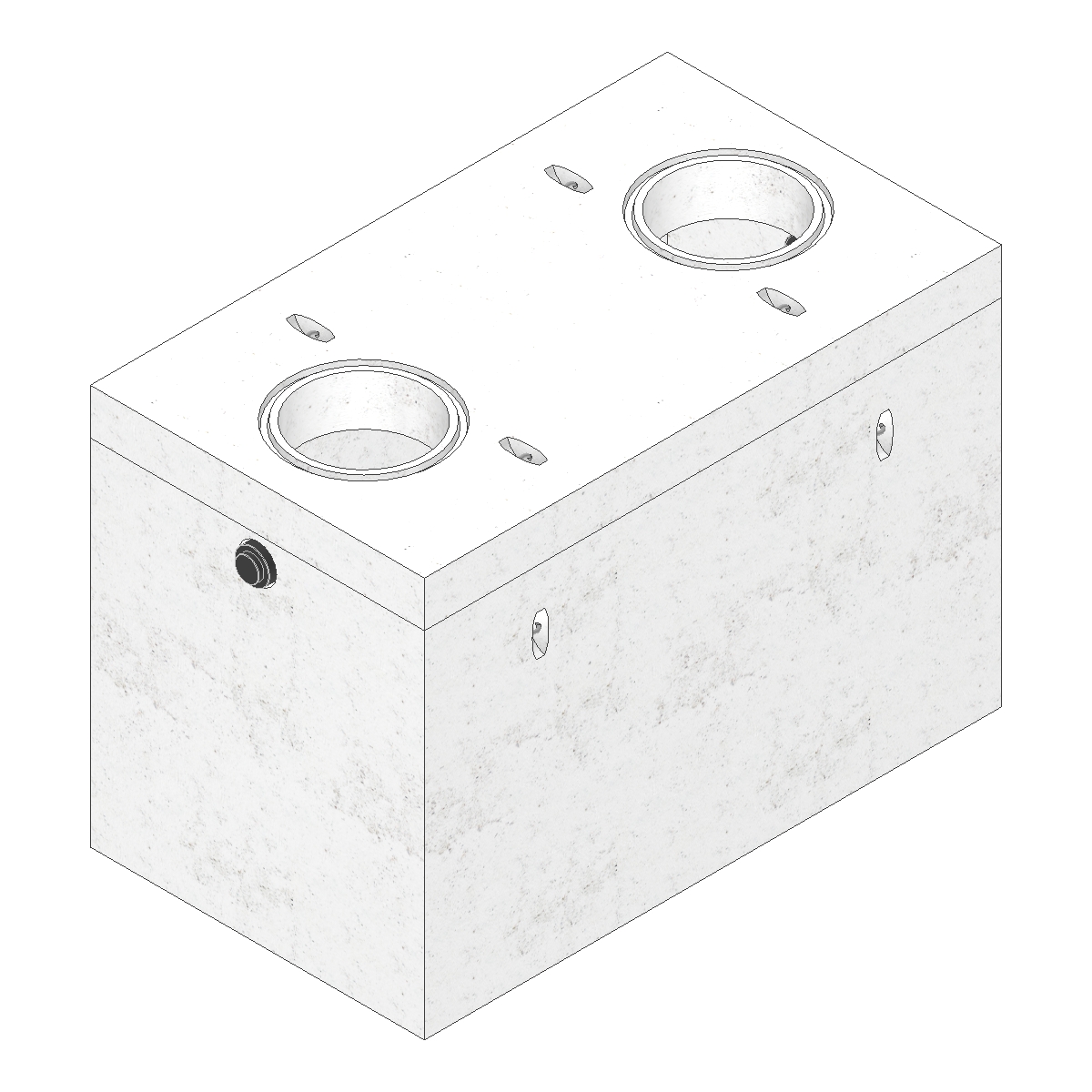
Tank MU 1200 Gallon 6 Inch Assembly 24"E, 24"E GR Access Single Baffle HGW
Tank MU 1200 Gallon 6 Inch Assembly 24"E, 24"E GR Access Single Baffle HGW
- Applicable Standards
- ACI 318,ASTM C890
- Approximate Weight
- 22210.24
- Burial Depth Range
- 1.1' - 9.0'
- Load Rating
- A-16 (AASHTO HS20-44)
- Number of Compartments
- Single Baffle
Desired pick up or delivery date and time are recorded at checkout. Confirmed date is determined after the order is processed.
Not finding what you’re looking for?
We can make modifications to a standard product or design a completely custom solution.
Inventory Check
Inventory across all manufacturing locations
Available in current region.
0 available across all regions.
Product Information
- Applicable Standards
- ACI 318,ASTM C890
- Approximate Weight
- 22210.24
- Burial Depth Range
- 1.1' - 9.0'
- Load Rating
- A-16 (AASHTO HS20-44)
- Model
- MU
- Number of Compartments
- Single Baffle
- Series
- 1200
For over 50 years, Jensen Infrastructure has been at the forefront of septic system design. Compare types of septic systems to find one that fits your needs.
How Does a Septic System Work?
A septic system is an underground wastewater treatment solution designed for properties that are not connected to a municipal sewer system. It works by collecting wastewater from a home or business and separating solids from liquids. The solid waste settles in a septic tank, where bacteria break it down, while liquid effluent flows into a drain field (leach field) for natural filtration through the soil. This process removes harmful bacteria and nutrients before the water returns to the groundwater system.
Parts of a Septic System
A typical septic system consists of three main components:
- Septic Tank – A watertight underground container that holds wastewater long enough for solids to settle and be broken down by bacteria.
- Drain Field (Leach Field) – A network of perforated pipes or chambers that allow treated liquid to seep into the soil for natural filtration.
- Soil and Gravel Layers – These layers act as a final filter, removing remaining impurities before the water is absorbed back into the environment.
Proper maintenance of each component is essential to prevent system failure and environmental contamination.
Conventional Septic System and How it Works
A conventional septic system is the most common type used for residential and small commercial properties. It typically includes a septic tank and a gravity-fed or pumped drain field. Conventional systems rely on soil filtration to treat wastewater, making them ideal for areas with well-draining soils. They are cost-effective, durable, and require minimal energy to operate. However, they require adequate space for installation and periodic maintenance to ensure efficiency.
Choosing a Septic Tank
Selecting the right septic system depends on several factors, including property size, soil type, water table levels, local regulations, and household wastewater needs. Conventional systems work well in areas with permeable soils, while properties with clay-rich or high-water table soils may require an alternative system, such as an aerobic or mound system. Consulting with a professional and conducting a soil test can help determine the best system for long-term performance and environmental compliance.

Related Product Categories

Recently Viewed
Add to List
Select a list to save this product.
Product added to list.