
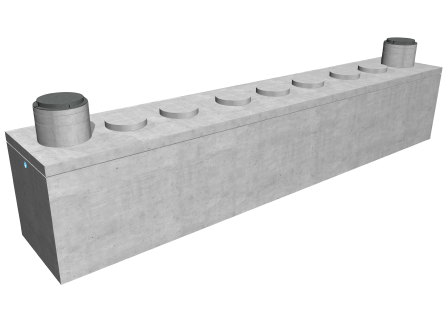
Septic Systems
Septic systems are wastewater treatment and dispersal solutions, typically consisting of underground precast concrete septic tanks and a subsurface drain field. Commonly found in rural areas without centralized sewer systems, our septic systems manage wastewater in thousands of residential and commercial settings.
Jensen Precast offers the largest selection of septic tank sizes anywhere in the United States. We manufacture 100% watertight systems that are easy to install, maintain, and service. We sold our first septic tank in 1968 and today lead the industry in state of the art systems.
Features & Benefits of Precast Concrete Septic Systems
For over 50 years, Jensen Infrastructure has been at the forefront of septic system design. Compare types of septic systems to find one that fits your needs.
How Does a Septic System Work?
A septic system is an underground wastewater treatment solution designed for properties that are not connected to a municipal sewer system. It works by collecting wastewater from a home or business and separating solids from liquids. The solid waste settles in a septic tank, where bacteria break it down, while liquid effluent flows into a drain field (leach field) for natural filtration through the soil. This process removes harmful bacteria and nutrients before the water returns to the groundwater system.Parts of a Septic System
A typical septic system consists of three main components:- Septic Tank – A watertight underground container that holds wastewater long enough for solids to settle and be broken down by bacteria.
- Drain Field (Leach Field) – A network of perforated pipes or chambers that allow treated liquid to seep into the soil for natural filtration.
- Soil and Gravel Layers – These layers act as a final filter, removing remaining impurities before the water is absorbed back into the environment.
Conventional Septic System and How it Works
A conventional septic system is the most common type used for residential and small commercial properties. It typically includes a septic tank and a gravity-fed or pumped drain field. Conventional systems rely on soil filtration to treat wastewater, making them ideal for areas with well-draining soils. They are cost-effective, durable, and require minimal energy to operate. However, they require adequate space for installation and periodic maintenance to ensure efficiency.Choosing a Septic Tank
Selecting the right septic system depends on several factors, including property size, soil type, water table levels, local regulations, and household wastewater needs. Conventional systems work well in areas with permeable soils, while properties with clay-rich or high-water table soils may require an alternative system, such as an aerobic or mound system. Consulting with a professional and conducting a soil test can help determine the best system for long-term performance and environmental compliance.Septic Systems Questions & Answers
What is the average life of a septic system?
A properly designed, installed, and maintained septic system can last 25 to 30 years or more. Jensen septic tanks are manufactured with high-strength precast concrete to ensure durability and longevity, making them an excellent choice for long-term performance in both residential and commercial applications.
What is the most expensive part of a septic system?
The septic tank itself and the leach field (or drain field) are typically the most significant investments in a septic system, however pricing may vary depending on the site conditions. At Jensen, we ensure that our tanks are engineered for maximum strength, reliability, and cost-effectiveness, providing exceptional value for contractors and municipalities while meeting the highest industry standards.
What legal requirements are there regarding septic systems?
Septic systems must comply with local county and state regulations, which may include permitting, soil testing, and design approval. Jensen offers septic tanks and alternative treatment systems that meet or exceed industry regulations, and our team is available to provide guidance on selecting products that comply with specific jurisdictional requirements.
Where can a septic system be used?
Septic systems are commonly used in areas without access to centralized sewer systems, such as rural communities, commercial developments, and remote sites. With Jensen’s range of precast concrete septic tanks and accessories, you can find scalable solutions for both residential and large-scale municipal projects.
What maintenance is required for septic systems?
Routine maintenance includes regular pumping of the septic tank to remove sludge, inspecting the system for leaks or damage, and ensuring the drain field is functioning properly. Jensen tanks are designed for easy access and durability, helping to simplify long-term maintenance for both contractors and property owners.